Current condition
Record machine layout, access doors, hazard and stopping information, existing guarding and control drawings. Distinguish the intended closed, locked, waiting, release-permitted, fault and restart states.
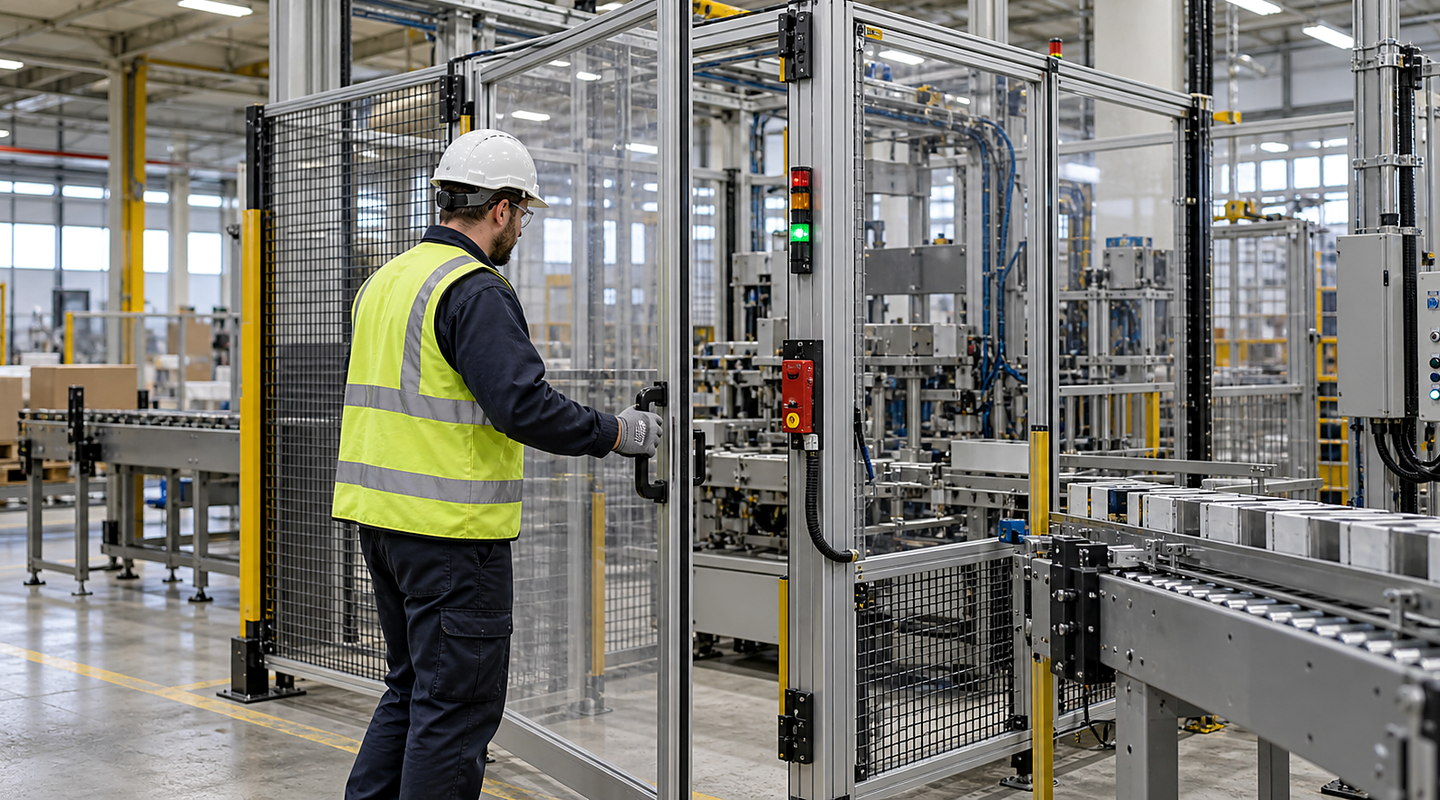
Agree guard-locking validation records for access requests, closed/locked states, release conditions, faults, power loss, occupied-space arrangements and the installed machine response.
Define expected behaviour for the installed guard, locking device, monitoring, logic and machine response before validation. Record normal access and restart states, release conditions, faults and power loss. Include escape and occupancy arrangements where relevant and retain actual results, settings, unresolved actions and responsible handover.
Link the access and release sequence to the same comparison requirements. A closed door or a successful normal cycle is not complete validation; emergency or auxiliary release needs a defined purpose and controlled return-to-service arrangements.
Plan guard locking systems around your machine hazards, operator tasks, access, stopping behaviour and validation evidence. Discuss a site-specific safeguarding concept with Oxford Machine Guarding. Use this guide to resolve risk-reduction and validation evidence before it limits the final system.
Discuss your application

Record machine layout, access doors, hazard and stopping information, existing guarding and control drawings. Distinguish the intended closed, locked, waiting, release-permitted, fault and restart states.
Include the agreed operating, setting, cleaning and maintenance access tasks, relevant fault and power-loss conditions and whole-body entry/escape arrangements where needed. State the boundaries of the validation.
Record how mechanics, sensors, logic and the machine response establish the required function. Agree the validation method, expected results, release/recovery responsibilities and records needed before return to service.
Identify the hazard, relevant access doors and tasks. Include run-down, stored or continuing hazards and any safeguarded space a person can enter; retain the assessment boundaries for each access route.
Record how the relevant hazardous condition ends and what evidence establishes the release condition. Do not assume a delay from another machine establishes safe access for this installation.
Describe normal access requests, waiting, entry, work inside the area and return to production. Include setting, cleaning, maintenance, escape and foreseeable occupancy where relevant to the assessment.
Distinguish guard position, locking condition, release permission, faults and restart functions. Agree their monitored states, machine response, interface ownership and required validation as one installed function.
Review each access door, operator indications and room for the intended tasks. Where whole-body entry is possible, include occupancy, escape and restart arrangements in the complete machine assessment.
Retain the agreed sequence, drawings, settings and expected/observed results for the installed mechanics, sensors, logic and machine response. Record faults, power-loss behaviour, unresolved issues and inspection responsibilities.